


Best places to visit in New Zealand from North Island cities to South Island fjords, including what to see, do, and experience across both islands.
New Zealand sits at the bottom of the Pacific, closer to Antarctica than to most of the world. That isolation has produced something extraordinary: a country with landscapes and wildlife found nowhere else, a living indigenous culture woven into daily life, and a pace of travel that rewards curiosity.
The country divides naturally into two islands, each with a completely different personality. The North Island runs warmer, more volcanic, and more urban. The South Island runs wilder, colder, and more cinematic. Together, they offer one of the most varied travel experiences available in a single country.
If you are looking for destinations that go beyond the usual tourist trail, we have covered some of the world's most offbeat countries worth adding to your list. Still, New Zealand is one destination that justifies every bit of the journey it takes to get there.
This guide covers the best places to visit in New Zealand across both islands: what each destination offers, why it matters, and what actually to do when you get there.
New Zealand North Island: Cities, Volcanoes, and Living Culture
The North Island holds roughly 75% of New Zealand's population and most of its urban centres. It is also the cultural home of Māori civilisation, with the most concentrated and accessible indigenous experiences in the country.
Auckland
Auckland is where most international travellers land and the logical starting point for any New Zealand trip. It sits on a narrow isthmus between two harbours, surrounded by 53 extinct volcanic cones, more urban volcanoes than any other city on Earth.
The Sky Tower at 328 metres remains the defining feature of the skyline and offers unobstructed views of the Hauraki Gulf and the 50 islands scattered across it. The inner suburbs of Ponsonby and Parnell carry the city's best food and independent retail. The Viaduct Harbour precinct is where Auckland's waterfront comes alive.
What to do in Auckland:
- Hike the summit of Rangitoto Island, a 600-year-old volcanic island accessible by ferry, with views across the gulf
- Visit the Auckland War Memorial Museum for the country's most comprehensive Māori cultural collection and daily live performances
- Take the ferry to Waiheke Island for olive groves, vineyards, and calm beaches, 35 minutes from the CBD
- Drive west to the Waitākere Ranges and walk down to Piha or Karekare, raw black sand beaches backed by dense rainforest
Auckland is also your jumping-off point north to the Bay of Islands, a 3-hour drive through Northland. The Bay of Islands is a cluster of 144 subtropical islands with sailing, dolphin encounters, and historic sites, including Cape Reinga, the northernmost point of the country, where the Tasman Sea and Pacific Ocean visibly collide, and where, in Māori belief, the spirits of the dead begin their journey to the ancestral homeland.
Waitangi Treaty Grounds
Located in Paihia in the Bay of Islands, the Waitangi Treaty Grounds are where New Zealand's founding document was signed in 1840 between Māori chiefs and the British Crown. It is the country's most important historic site.
Guided tours walk through the original Treaty House, the elaborately carved Whare Rūnanga meeting house, and the museum. Cultural performances run daily. The grounds sit on a headland with direct views over the Bay of Islands, and the setting alone is worth the visit.
Rotorua
Rotorua is one of the most immediately recognisable places in New Zealand. The city sits atop an active geothermal field: steam rises from roadside vents, mud pools bubble in public parks, and the air carries a faint sulphur smell that locals have long stopped noticing, but visitors always do.
That geothermal energy is the backdrop for something more significant. Rotorua is the cultural heartland of Māori New Zealand. More authentic indigenous experiences are concentrated here than anywhere else in the country.
What to do in Rotorua:
Te Puia is the most comprehensive cultural and geothermal site in New Zealand. It spans 60 hectares of the Whakarewarewa Valley and contains the Pōhutu Geyser, the largest active geyser in the Southern Hemisphere, erupting up to 20 times daily to heights of 30 metres. Within the same site, the New Zealand Māori Arts and Crafts Institute runs active training programmes in wood carving and weaving. Evening cultural performances include traditional haka and hāngī dining cooked using geothermal steam.
Mitai Māori Village offers a more intimate setting: a bush environment with a natural stream where a traditional waka (war canoe) arrives by night, followed by cultural performance and hāngī. The forest behind the village also supports a glowworm population visible on the night walk.
Wai Ariki Hot Springs and Spa applies Māori healing philosophy to a luxury spa format: mineral bathing, geothermal mud treatments, and herbal soaks informed by traditional rongoā (Māori medicine).
For adventure travellers, whitewater rafting on the Grade 5 Kaituna River, which includes a 7-metre waterfall drop, is one of the more memorable things to do in New Zealand.
Waitomo
Waitomo sits about 80 kilometres south of Hamilton in a quietly rural stretch of the King Country region. The caves beneath the limestone hills contain one of nature's more unusual spectacles: thousands of bioluminescent glowworms (arachnocampa luminosa) that exist only in New Zealand, clustering on cave ceilings and producing a cold blue-green light that maps the roof like a star field.
Standard boat tours drift silently through the main cave in near-darkness. The silence is part of the experience. For visitors wanting more, blackwater rafting takes you through separate cave systems on inflated tubes with the glowworms overhead throughout.
Wellington
Wellington is New Zealand's capital and the country's cultural engine. It is a compact city you can walk most of, built on steep hills around a deep harbour.
Te Papa Tongarewa, the national museum, is free to enter and genuinely world-class. Its Māori collection holds over 30,000 taonga (treasures), including ancestral carvings, rare garments, and significant archaeological objects. The Māori Highlights guided tour, departing daily at 2 pm and ticketed separately, is the most efficient way to understand the collection's depth.
Wellington holds the country's highest density of craft breweries and independent coffee roasters relative to population. Cuba Street is the city's creative spine: bookshops, live music venues, street art, and food.
Zealandia, a 225-hectare fully fenced ecosanctuary ten minutes from the CBD, is where you are most likely to encounter species pushed to the fringes by introduced predators, including the tuatara, kākā, and little spotted kiwi.
Tongariro National Park
Tongariro is New Zealand's oldest national park and a UNESCO dual World Heritage Site, recognised for both natural and cultural significance. The park contains three active volcanoes and sits at the centre of the North Island.
The Tongariro Alpine Crossing covers 19.4 kilometres in a single day and is widely regarded as one of the world's best one-day walks. The trail passes through volcanic craters, past the vivid Emerald Lakes formed in old explosion pits, across lava fields, and around Mount Ngāuruhoe, which served as Mount Doom in the Lord of the Rings films. Weather changes fast at elevation; booking a shuttle and checking forecasts the evening before is essential.
The park holds deep significance for the Ngāti Tūwharetoa iwi (tribe), who gifted the land to the New Zealand government in 1887, making Tongariro the first national park created in the Southern Hemisphere.
Hobbiton
The Hobbiton Movie Set in Matamata is a working farm that Peter Jackson's location scouts found in 1998 while scouting by helicopter. The property was used for the Lord of the Rings trilogy and The Hobbit films, then rebuilt permanently after the latter production.
Guided tours take approximately 2 hours and cover 44 hobbit holes built at three different scales, Bilbo Baggins' Bag End, the Party Tree, and the Green Dragon Inn, where the tour ends with a complimentary drink. Book ahead because it fills weeks in advance during peak season.
New Zealand South Island: Landscapes That Demand Your Attention
The South Island has a fraction of the population but contains the majority of New Zealand's most dramatic natural scenery. The Southern Alps run the length of the island. Glaciers carve down their western flanks. Fjords cut deep into the southwest. The east opens into the wide Canterbury plains and the golden coastline of Abel Tasman. If you have explored Europe's most beautiful landscapes, the South Island holds its own and then some, on a smaller and more accessible scale.
Queenstown
Queenstown is built around Lake Wakatipu, a glacially carved lake shaped by the movement of ancient ice sheets. The town itself is small. The activity offering is enormous.
It is the commercial centre of New Zealand adventure tourism. Bungee jumping, skydiving, jet boating, paragliding, white-water rafting, heli-skiing, canyon swing, and mountain biking are all available within 30 minutes of the town centre. The original commercial bungee jump, the 43-metre Kawarau Bridge, still operates with a viewing platform for non-jumpers.
In winter, Queenstown operates as the South Island's main ski hub. The Remarkables ski field sits directly visible from town. Coronet Peak is 20 minutes away and offers night skiing.
The town is also a popular choice for couples. If you are planning a romantic trip or considering New Zealand for a destination wedding, Queenstown's dramatic scenery makes it one of the most photographed ceremony backdrops in the world. It also consistently appears on lists of the best honeymoon destinations globally, where the combination of adventure, fine dining, and alpine scenery works well for couples travelling together.
Beyond the adrenaline activities, the Glenorchy Road is a 45-kilometre drive along Lake Wakatipu with views used in the Lord of the Rings and Avatar: The Way of Water, and is rated one of New Zealand's most scenic road stretches. Winery visits in the Gibbston Valley, a high-altitude subregion producing pinot noir in conditions that challenge the vine and concentrate the flavour, round out the Queenstown experience.
Milford Sound (Piopiotahi)
Milford Sound sits inside Fiordland National Park in the southwest corner of the South Island. The fjord stretches 15 kilometres from the mountains to the Tasman Sea.
The defining characteristic is vertical scale. The cliffs rise 1,200 metres directly from the water. Mitre Peak climbs 1,692 metres from sea level. Two permanent waterfalls, Stirling and Lady Bowen, run year-round, and after rain dozens of temporary cascades appear across the cliff faces.
Standard cruises run 2 hours and cover the full length of the sound. Overnight cruises allow kayaking, swimming, and stargazing in near-total wilderness. The road to Milford Sound through the Homer Tunnel and Eglinton Valley is itself one of New Zealand's great scenic drives.
Lake Tekapo and Lake Pukaki
These two lakes in the Mackenzie Basin are fed by glacial meltwater carrying suspended rock flour: microscopic particles ground from the bedrock by glacial movement that scatter light and produce the lakes' vivid blue-green colour.
Lake Tekapo sits within the Aoraki Mackenzie International Dark Sky Reserve, one of the largest dark sky reserves in the world, covering 4,300 square kilometres. Light pollution is legally controlled across the entire basin. The Dark Sky Project on the summit of Mount John runs guided stargazing sessions and connects the southern sky to Māori astronomical knowledge.
If stargazing draws you to travel, it is worth also reading our guide on where to see the Northern Lights across the world, a completely different but equally spectacular night sky experience available in the Northern Hemisphere.
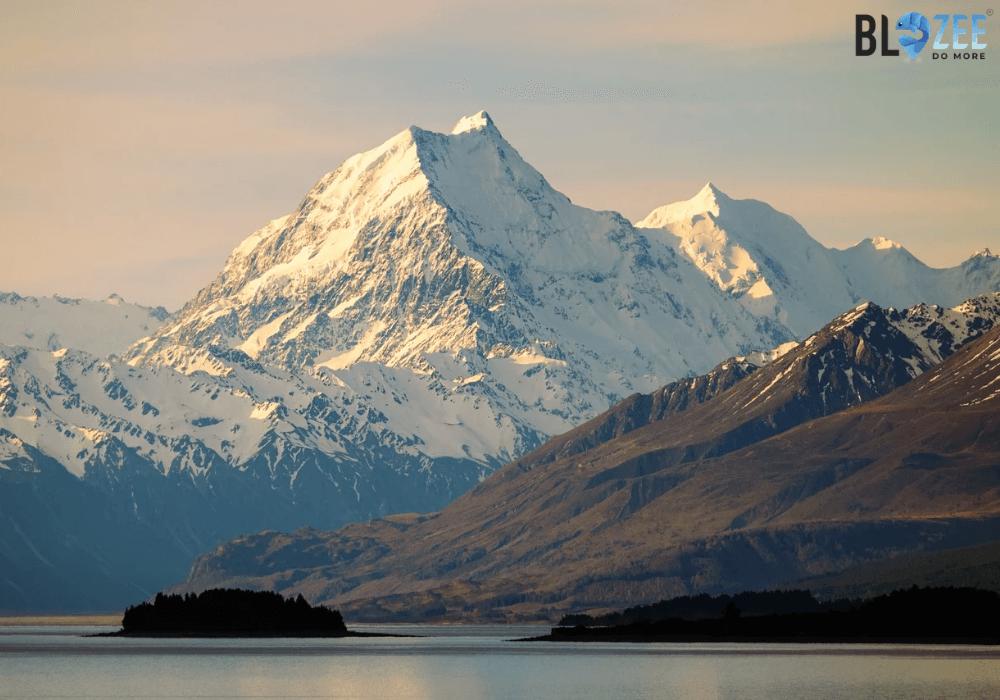
Lake Pukaki is visually more dramatic: the colour is more saturated, and Aoraki/Mount Cook at 3,724 metres, New Zealand's highest peak, frames the far end. The 55-kilometre road along the lake's western shore leading to the Mount Cook village is one of the most photogenic drives in the country.
Abel Tasman National Park
Abel Tasman is New Zealand's smallest national park and its most visited coastal one. Located at the top of the South Island, the park runs 60 kilometres of coastline with consistent golden sand beaches, clear water, and forest that meets the shore.
The Abel Tasman Coast Track is one of New Zealand's official Great Walks: a 3 to 5-day coastal route connecting beaches and bays, with a water taxi system allowing walkers to skip sections or access specific beaches directly. The track is well-maintained and does not require technical hiking experience.
Kayaking the coastline is the most popular single-day activity in the park. Waka (Māori canoe) tours connect the coastline to Māori navigation history. The same waters were crossed by ancestors arriving from Polynesia, and local guides carry that knowledge as part of the experience rather than as a tourism add-on.
Kaikōura
Kaikōura is a small coastal town where the Kaikōura Canyon, a deep underwater trench running close to shore, creates a permanent feeding ground for marine life. Sperm whales are present year-round. Humpback whales pass through seasonally. Dusky dolphins, New Zealand fur seals, and albatross are consistent across all seasons.
Whale Watch Kaikōura integrates the story of Paikea throughout the experience: the Māori ancestor believed to have arrived in Aotearoa on the back of a whale, weaving natural wonder and cultural narrative together in a way few wildlife tours manage.
Christchurch
Christchurch is the South Island's largest city and the main entry point for air travellers from the North Island. The city experienced a devastating 6.3 magnitude earthquake in February 2011 that killed 185 people and destroyed much of the CBD. The rebuild has been ongoing, with cleared ground used for architectural experimentation: container malls, low-rise innovation precincts, and new public spaces occupy what was once conventional urban fabric.
The Canterbury Museum holds strong Māori taonga collections and Antarctic exploration history. The Christchurch Botanic Gardens cover 21 hectares in the city centre and are free to enter. The Port Hills above the city offer walking and mountain biking trails with views across the Canterbury Plains toward the Southern Alps.
Christchurch is also the departure point for the TranzAlpine train journey, a 4.5-hour scenic rail crossing of the Southern Alps to Greymouth on the West Coast, rated consistently as one of the world's great train journeys.
Stewart Island / Rakiura
Stewart Island sits 30 kilometres south of the South Island's southern tip, accessible by a 1-hour ferry from Bluff or a 20-minute flight. Its permanent population is approximately 400 people.
The island holds one of the last stable wild kiwi populations in New Zealand. Guided night walks give visitors the best chance of spotting the country's iconic bird in its natural habitat, an experience almost impossible to replicate elsewhere. The Rakiura Track is one of New Zealand's Great Walks: a 3-day circular route through coastal forest and across elevated ridgelines. The North West Circuit is a demanding 9 to 11-day wilderness route through near-untouched terrain for those wanting complete immersion.
New Zealand Culture: What You Need to Know
Māori culture is not a historical footnote in New Zealand. It is legally recognised and actively practised. Te Reo Māori is an official language alongside English and New Zealand Sign Language. Place names across the country are dual-language. Government departments, street signs, and public institutions carry the Māori language as standard.
Key cultural concepts for travellers:
Tangata Whenua means "people of the land." The Māori are the tangata whenua of New Zealand, with an unbroken connection to the land going back approximately 700 years.
Marae is the communal gathering place of a Māori community. Visiting a marae involves a pōwhiri (welcoming ceremony) led by the host community's elders. Protocol matters here: follow your host's guidance, wait to be invited forward, and never enter a wharenui (meeting house) without being formally welcomed.
Haka is a ceremonial performance involving movement, chanting, and rhythmic stamping. It is used in multiple contexts: as a welcome, a challenge, a celebration, and a farewell. The All Blacks rugby team has made it globally recognised, but it carries far more cultural weight in its original context than any sporting performance conveys.
Hāngī is food cooked in an underground earth oven using heated volcanic rocks or geothermal steam. It traditionally includes pork, chicken, lamb, and vegetables wrapped in leaves and lowered into the pit for several hours. Tasting a hāngī meal is one of the most direct connections a visitor can make with Māori food culture.
Pounamu (Greenstone) is jade found primarily on the West Coast of the South Island. Deeply sacred to Māori, taonga made from pounamu were passed between generations and carried spiritual significance. Carving workshops in Hokitika and Franz Josef allow visitors to make their own pendant, which is a legitimate and respectful way to engage with the tradition.
Cities in New Zealand: Quick Reference
| City | Island | Known For |
|---|---|---|
| Auckland | North | Largest city, international gateway, Māori museum, island escapes |
| Wellington | North | Capital city, Te Papa Museum, café culture, creative industries |
| Hamilton | North | Gateway to Waitomo and Hobbiton, Waikato River |
| Napier | North | Art Deco architecture, Hawke's Bay wine region |
| Christchurch | South | Largest South Island city, post-quake architecture, alpine gateway |
| Queenstown | South | Adventure tourism, skiing, Fiordland access |
| Dunedin | South | Scottish heritage, wildlife coast, university city |
| Nelson | South | Sunshine capital, gateway to Abel Tasman and Marlborough |
Best Time to Visit New Zealand
December to February (Summer): Warmest temperatures, long daylight hours, best beach conditions. Busiest season with the highest prices and accommodation pressure. Book 3 to 6 months ahead for popular South Island routes. If you are visiting during December specifically, our December travel guide for warm destinations has broader options worth considering alongside New Zealand.
March to May (Autumn): Quieter than summer with stable weather, fewer crowds, and dramatic autumn colour in deciduous forest areas. Strong hiking conditions across most of the country.
June to August (Winter): Cold in the South Island, milder in the north. Best skiing conditions in Queenstown and Mount Hutt. Shoulder pricing and less competition for accommodation and experiences.
September to November (Spring): Weather improving, crowds building towards summer. A good window for road trips before the school holiday peak.
Practical Information
Visa: Requirements vary by nationality. Most travellers need a New Zealand Electronic Travel Authority (NZeTA) applied for online before departure. Check Immigration New Zealand's official website for the most current requirements specific to your passport.
Currency: New Zealand Dollar (NZD). Cards are accepted almost everywhere. Cash is useful in smaller towns and for market purchases.
Getting Around: New Zealand's public transport is limited outside main cities. A rental car or campervan gives the most flexibility. The Interislander ferry crosses the Cook Strait between Wellington and Picton in approximately 3 hours, connecting the two islands. Domestic flights between main cities are frequent and reasonably priced.
New Zealand is a genuinely self-driving country. Most of the best scenery is off the main routes and requires a vehicle to reach. This is a fundamentally different travel style from Japan, for example, where public transport takes you almost everywhere. If you are comparing multi-country Asia-Pacific itineraries, our Japan travel guide with a 7-day itinerary covers Tokyo, Kyoto, and Osaka for those combining both destinations on a longer trip.
Safety: New Zealand is consistently rated among the safest countries in the world for travellers. Outdoor safety is a separate consideration. The weather in Alpine and coastal areas changes fast. Always check conditions before hiking, file an intention with someone if heading into the backcountry, and respect marine and weather warnings.
Tipping: Not expected or required in New Zealand.
Power: 230V, Type I sockets (same as Australia). An adaptor is needed for most international devices.
One practical note for travellers new to international trips: common visa and customs mistakes similar to those covered in our guide on travel mistakes to avoid when visiting the USA apply equally to New Zealand. Biosecurity declarations are taken seriously here; undeclared food, plant material, or outdoor footwear can result in fines at the border.
Top 15 Places to Visit in New Zealand
- Auckland: International gateway with volcanic parks, harbour escapes, and Māori cultural exhibitions
- Bay of Islands: 144 subtropical islands, Waitangi Treaty Grounds, and Cape Reinga at the country's northern tip
- Waipoua Forest: Ancient kauri trees, including Tāne Mahuta, guided by Māori storytellers at twilight
- Rotorua: Geothermal activity and the highest concentration of Māori cultural experiences in the country
- Waitomo: Glowworm caves found nowhere else on Earth, and blackwater rafting underground
- Hobbiton, Matamata: The permanent Lord of the Rings film set on a working Waikato farm
- Wellington: Capital city with Te Papa Museum, Zealandia ecosanctuary, and Cuba Street
- Tongariro National Park: Active volcanic landscape and one of the world's great one-day hikes
- Abel Tasman National Park: Coastal walking and kayaking through golden-sand bays
- Kaikōura: Year-round sperm whale watching, dolphins, and Māori marine heritage
- Christchurch: South Island gateway, TranzAlpine rail crossing, and post-earthquake architectural reinvention
- Lake Tekapo: Glacial colour and one of the world's most protected dark sky reserves
- Lake Pukaki and Aoraki/Mount Cook: New Zealand's most iconic mountain view at the end of a turquoise lake
- Queenstown: Adventure hub for bungee, skiing, jet boating, and access to Milford Sound
- Milford Sound: Fiordland fjord with 1,200-metre cliffs, permanent waterfalls, and resident marine life
FAQ
Q1. What are the most beautiful places to visit in New Zealand?
Milford Sound, Lake Pukaki with Aoraki/Mount Cook in the background, the Marlborough Sounds, Abel Tasman's coastline, and the volcanic landscape of the Tongariro Alpine Crossing are consistently considered the country's most visually striking locations. The South Island carries the majority of alpine and coastal scenery, while the North Island holds the geothermal and subtropical landscapes.
Q2. What are the best things to do in New Zealand?
The Tongariro Alpine Crossing for one-day hiking, cruising Milford Sound, experiencing a hāngī and haka in Rotorua, stargazing at Lake Tekapo, bungee jumping at the Kawarau Bridge in Queenstown, walking through the Waitomo Glowworm Caves, visiting Hobbiton, and whale watching at Kaikōura are the experiences most travellers rate as the highlights of a New Zealand trip.
Q3. What is the difference between New Zealand's North Island and South Island?
The North Island is warmer, more volcanically active, and home to the major cities and Māori cultural heartland. The South Island is colder, more mountainous, and defined by its dramatic fjords, glaciers, and alpine scenery. Most travellers spend time on both. Doing justice to just one island typically requires at least 7 days.
Q4. What cities should I visit in New Zealand?
Auckland is the primary international gateway and largest city. Wellington is the capital and cultural centre. Queenstown is the adventure hub of the South Island. Christchurch is the South Island's main urban base. Each has a distinct character and is worth at least 1 to 2 days.
Q5. How many days do I need in New Zealand?
Ten to fourteen days covers both islands at a reasonable pace. Three weeks allow for depth, detours, and the slower travel that reveals more of the country. A single week is enough to do one island well, but not both.
Q6. What is Māori culture in New Zealand?
Māori are the indigenous people of New Zealand, with Polynesian ancestry tracing back approximately 700 years. Their culture, including language, performing arts, oral history, relationship to the land, and craft traditions, is actively practised today and legally protected. Rotorua and the Bay of Islands offer the deepest immersive access. Encounters across the country range from museum collections to waka paddling, guided forest walks, carving workshops, and hāngī dinners.
Q7. Is New Zealand safe for solo travellers?
Yes. New Zealand consistently ranks among the top five safest countries in the world. Solo travel is well-supported through a strong hostel network, established backpacker routes, and a culture of openness to independent travellers. Standard outdoor safety precautions apply in alpine and backcountry settings.
Q8. What is the best way to get around New Zealand?
Renting a car or campervan provides the most flexibility and access to the country's best scenery, most of which lies off main routes. The Interislander ferry connects the two islands. Domestic flights between main cities are frequent and reasonably priced. Organised tours and bus passes exist for travellers who prefer not to self-drive.
Become a member
Get the latest news right in your inbox. We never spam!

Comments (0)(Loading...)