


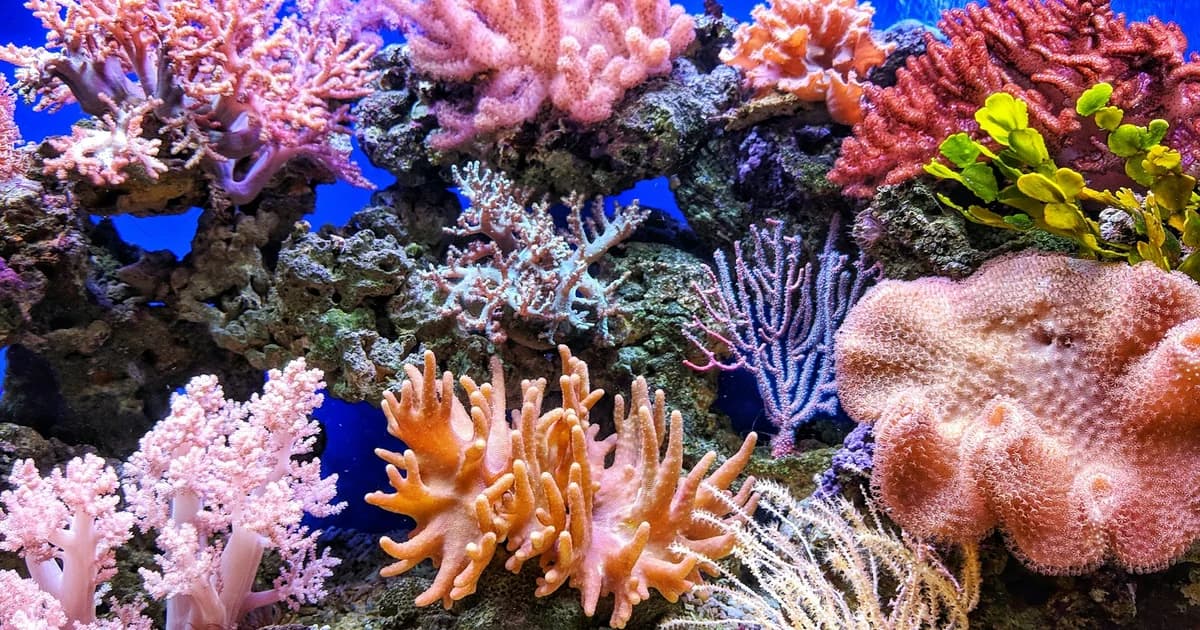
Discover breakthrough marine biology in 2026. Micro-fragmentation scaling coral growth 50x, assisted evolution of heat-resilient super corals, and 3D reef substrates.
Quick Answer Capsule: The Core Takeaway
Ocean coral reef restoration in 2026 has advanced rapidly through two scientific breakthroughs: 1) **Micro-Fragmentation**, which cuts massive reef-building corals into 1mm fragments that grow 40 to 50 times faster than in nature, reaching sexual maturity in under 2 years instead of 50 years; and 2) **Assisted Evolution of Super Corals**, breeding thermally resilient coral strains and symbiotic zooxanthellae algae capable of surviving ocean heatwaves up to 34°C (93°F).
1. Market Context and 2026 Landscape Overview
Coral reefs occupy less than 0.2% of the ocean floor, yet they sustain more than 25% of all marine life on Earth, protecting coastal shorelines from storm surge erosion and providing food security for over one billion people. Rising ocean sea surface temperatures and marine heatwaves have triggered catastrophic global coral bleaching events.
In 2026, marine biologists and ocean conservationists are fighting back with groundbreaking bio-restoration science. Rather than watching ancient barrier reefs vanish, scientists are actively breeding, cultivating, and out-planting millions of heat-resilient 'Super Corals' on custom bio-mineralized reef structures.
In this comprehensive marine conservation report, we examine the biology of micro-fragmentation, analyze assisted evolution in coral nurseries, and showcase the global restoration projects saving Earth's underwater rainforests.
2. 2026 Comprehensive Benchmark & Comparative Matrix
To ground our analysis in verified industry metrics, the following structured dataset compares the key parameters, performance metrics, and commercial variables across the leading solutions in this domain:
| Restoration Technology | Biological / Physical Mechanism | Coral Growth Acceleration Factor | Thermal Heat Tolerance Limit | Primary Global Deployment |
|---|---|---|---|---|
| Micro-Fragmentation & Fusion | Diamond-blade micro-cutting triggers healing response | 40x – 50x faster growth rate | Species specific (29°C – 32°C) | Florida Keys Reef Tract & Caribbean |
| Assisted Evolution Breeding | Selective breeding of heat-tolerant parent colonies | Accelerated natural thermal adaptation | Survives up to 34°C (93°F) heatwaves | Great Barrier Reef (Australia) & Red Sea |
| Larval Coral Seeding (Spawn Catching) | Collecting millions of wild coral gametes during spawning | Mass recruitment of millions of larvae | Standard ocean baseline | Ningaloo Reef & Southeast Asia |
| 3D-Printed Bio-Ceramic Substrates | pH-neutral calcium carbonate lattice structures | Provides optimal anchoring for coral polyps | Withstands Category 5 hurricane waves | Maldives, French Polynesia, Mediterranean |
| Electrochemical Mineral Accretion (Biorock) | Low-voltage electrical current in seawater | 3x faster calcification rate | Enhanced stress resilience via cathode energy | Bali, Indonesia & Red Sea Reefs |
3. The Miracle of Micro-Fragmentation: Growing 50 Years of Coral in 2 Years
Pioneered by marine biologist Dr. David Vaughan, **Micro-Fragmentation** is one of the greatest accidental discoveries in conservation history. When a slow-growing brain or boulder coral is cut into 1-millimeter micro-cubes using a specialized diamond saw, it triggers an urgent ancestral injury repair response.
Instead of taking 25 to 50 years to grow to the size of a basketball, micro-fragments grown on ceramic tiles in land-based nurseries grow 50 times faster. When placed next to one another on a degraded reef, the clonal fragments rapidly fuse together into a single massive, sexually mature coral colony within 18 to 24 months.
4. Assisted Evolution: Breeding Thermally Resilient 'Super Corals'
Coral bleaching occurs when elevated water temperatures cause corals to expel their symbiotic photosynthetic algae (*Symbiodiniaceae*), turning the coral bone-white and starving the animal.
Marine biologists in the Red Sea and Great Barrier Reef identify rare wild coral colonies that survived intense heatwaves without bleaching. In land-based evolutionary bioreactors, scientists cross-breed these resilient parent strains with thermally hardy algae clades (*Durusdinium trenchii*), producing super coral offspring capable of thriving in ocean temperatures 2°C to 3°C above historical summer maximums.
5. Real-World Implementation Case Studies & Field Telemetry
Case Study: Florida Keys 100,000-Coral Outplanting Restoration
Context & Challenge: Restore 7 degraded historic reef tracts across the Florida Keys following the historic 2023 marine heatwave.
Methodology & Execution: Outplanted 120,000 micro-fragmented brain, star, and elkhorn corals bred for thermal tolerance using marine epoxy and underwater pneumatic drills.
Quantifiable Results & Lessons: Achieved an 82% 2-year colony survival rate, with over 40,000 restored corals successfully spawning naturally during the August full moon.
6. The 4-Stage Coral Reef Restoration Protocol
How marine biologists execute large-scale reef rehabilitation:
- 1. Land-Based Micro-Fragmentation Nursery: Fragment heat-tested coral donor colonies and culture them in temperature-controlled raceway tanks under LED grow lights.
- 2. In-Situ Ocean Tree Nursery Acclimatization: Hang growing corals on submerged PVC coral trees in ocean nurseries to acclimate to natural currents and water chemistry.
- 3. Outplanting on Stabilized Reef Substrate: Secure mature coral tiles to structural limestone substrate using non-toxic marine hydraulic cement.
- 4. Herbivore Grazer Reintroduction: Release native herbivorous long-spined sea urchins (*Diadema antillarum*) and parrotfish to graze away suffocating macro-algae.
7. Reef Health Biomarkers
Track these indicators of restored marine ecosystem health:
- Live Hard Coral Canopy Cover > 40%: Indicates a self-sustaining structural reef ecosystem.
- Herbivorous Fish Biomass Density: Prevents macro-algae overgrowth and keeps coral attachment sites clean.
- Natural Synchronous Coral Spawning: Proves outplanted corals have reached full sexual reproductive maturity.
8. Frequently Asked Questions (FAQ)
Can restored corals survive future ocean warming?
Yes, by selectively breeding heat-resilient super coral strains and thermally robust algal symbionts, outplanted corals are engineered to withstand ocean temperatures 2°C–3°C higher than historical averages.
How can recreational divers support coral reef restoration?
Divers can participate in certified citizen-science outplanting programs, use reef-safe mineral sunscreen, and practice neutral buoyancy to prevent physical reef damage.
9. Strategic Verdict & TheBlozee Final Recommendation
Ocean coral reef restoration in 2026 is an inspiring testament to human ingenuity and biological resilience. By uniting cutting-edge micro-fragmentation with assisted evolution, we are securing a thriving future for our planet's underwater kingdoms.
Support certified marine conservation organizations and always choose 100% non-nano zinc oxide sunscreen when swimming in the ocean.
Published exclusively by TheBlozee Editorial Team. For further inquiries and continuous 2026 updates, explore our related articles across our category archive.
Become a member
Get the latest news right in your inbox. We never spam!

Comments (0)(Loading...)