


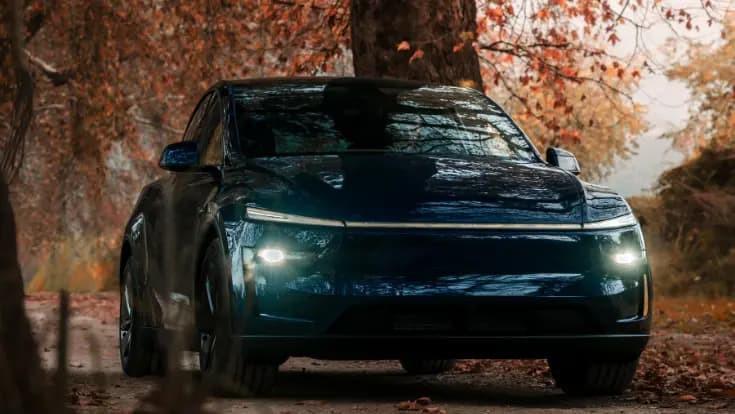
Explore the best EV cars in India 2026. From Mahindra BE6 to MG Windsor EV on road price, Hyundai Creta Electric, Maruti e Vitara and upcoming 2026 electric cars.
Two years ago, buying an electric car in India felt like a commitment to something that was still figuring itself out. One manufacturer dominated the market, public chargers were hit or miss outside of Delhi and Bangalore, and the honest answer to "should I buy an EV?" was often "maybe wait a little longer."
That wait is over.
As of May 2026, there are 59 electric cars on sale in India. The MG Windsor EV crossed 50,000 sales within 400 days of launch. Mahindra's BE6 and XEV 9e together had 30,000 bookings before a single delivery happened. The Hyundai Creta, already the most trusted mid-size SUV name in India, arrived in electric form and instantly gave buyers another reason to switch.
We are now in a market where you can buy a proper electric car for under Rs 8 lakh, get a family SUV with a 600 km claimed range for under Rs 20 lakh, or sit inside a triple-screen luxury cabin with AR Rahman-curated ambient themes for Rs 22 lakh. The options are real, and they are getting better.
If you are sitting on the fence, wondering which EV actually makes sense for your daily commute, your family size, and your parking situation, this guide is written for you. No fluff, no jargon overload. Just honest assessments of every major EV in India right now.
Why 2026 is actually a good year to switch to an EV
There are three things that have come together in 2026 that were not all present at the same time before.
The first is genuine product variety. A few years ago, your choices were limited, and the range anxiety was real. Today, you can pick from affordable hatchbacks under Rs 10 lakh, practical family SUVs with 450 to 600 km claimed range, and performance EVs that will embarrass a lot of petrol cars at the traffic light. Whatever your budget, there is something designed for you.
The second is infrastructure that is actually useful. Delhi has committed to 95 percent EV usage by 2027 and is investing heavily in charging points. Major highway corridors in north and west India now have DC fast chargers every 40 to 80 kilometres. More importantly, home charging has become normal. Most EV owners charge overnight and start every morning with a full battery, which genuinely removes the anxiety once you get used to the routine.
The third is the money making sense. An EV costs roughly Rs 1 to Rs 1.5 per kilometre to run versus Rs 7 to Rs 10 for petrol. Annual maintenance runs 30 to 40 percent lower because there is no engine oil, no clutch, and fewer moving parts to wear out. If you drive more than 50 km a day, the total cost of ownership on an EV is now clearly lower than a comparable petrol car over a five-year period. The number crunching finally works.
Best EV Cars in India 2026: The Full Breakdown by Budget
Under Rs 10 Lakh: Where It All Starts
Tata Tiago EV: The One That Started This Conversation
Price: Rs 7.99 lakh to Rs 11.14 lakh (ex-showroom) Battery: 19.2 kWh and 24 kWh options ARAI claimed range: Up to 315 km (24 kWh) Real-world range: Around 230 to 250 km Charging: 3.3 kW AC wallbox included free; 0 to 100% via DC fast charger in 87 minutes
Let's be honest. A lot of people assumed that a sub-Rs 8 lakh EV would be a stripped-down thing you would feel embarrassed to park at a mall. The Tata Tiago EV is not that.
This is a properly equipped hatchback. Cruise control, auto climate control, rain-sensing wipers on higher trims, and a liquid-cooled battery that actually charges faster than many rivals, costing twice the price. Tata includes the AC wallbox charger as standard, which most competitors charge extra for or simply do not offer.
In real-world conditions, you are getting 230 to 250 km from a full charge. For anyone driving under 60 km a day, that means you plug in at home, go to sleep, wake up to a full battery, and you never have to think about a petrol pump again. That is genuinely life-changing in a way that sounds dramatic but really is not.
Where the Tiago EV runs out of logic is on long highway trips. The battery is small. For Mumbai-Pune, it works. For anything over 200 km, plan carefully. But as a city commuter or a second family car, nothing comes close at this price in India.
MG Comet EV: City Only, Please
Price: Rs 6.31 lakh onwards Battery: 17.3 kWh Range: Up to 230 km (claimed)
The Comet is technically India's cheapest EV, and it does have a charm to it. Two doors, four seats, ultra-compact. It will get into parking spots that full-size cars cry about. But it is a city-only machine and really only makes sense as a second car for extremely short daily distances. Not a recommendation for a primary vehicle or anyone with a family.
Rs 10 to 15 Lakh: The Budget Mid-Range
Citroen eC3: The More Space Option
Price: Rs 11.60 lakh to Rs 13.50 lakh (ex-showroom) Battery: 29.2 kWh ARAI claimed range: 320 km Real-world range: Around 228 km (Autocar India test) Motor: 57 hp, 143 Nm Charging: DC fast charge to 100% in 94 minutes; no AC wallbox included as standard
The eC3 asks for about Rs 3 to Rs 4 lakh more than the Tiago EV and gives you a meaningfully roomier cabin in return. Four adults can actually sit comfortably inside this one, which is not always true of the Tiago.
Autocar India ran a back-to-back real-world range test, and both the eC3 and Tiago EV returned identical efficiency at 7.8 km per kWh. The eC3's larger battery translated that into 228 km of actual range. The Tiago EV with its 24 kWh pack got 187 km in the same test. So if you regularly carry passengers or occasionally need a bit more range buffer, the eC3 earns its premium.
The honest limitations: the interior design looks dated compared to what you get in newer EVs, and Citroen does not include an AC wallbox charger as standard. At Rs 11.60 lakh, that feels like a miss. The eC3 is a solid buy if you need more cabin space than the Tiago EV, but keep those limitations in mind.
Tata Punch EV: Quietly the Best Value Compact EV in India
Price: Rs 9.69 lakh to Rs 12.59 lakh (ex-showroom) Battery: Up to 45 kWh ARAI claimed range: Up to 421 km
If the Tiago EV feels too small and the jump to a full mid-size SUV feels too expensive, the Tata Punch EV sits in that sweet spot and does it very well. It has significantly more range than the Tiago, a compact SUV stance that Indian roads handle comfortably, and a strong safety record. Worth serious consideration if your budget goes up to Rs 12 lakh.
Rs 12 to 18 Lakh: The Volume Segment, and It Is Competitive
MG Windsor EV: India's Best-Selling EV Has Reasons Behind That Title
Ex-showroom price: Rs 12.04 lakh to Rs 18.39 lakh. On-road price in Delhi: Starting around Rs 14 lakh (RTO and insurance included). Battery: 38 kWh ARAI claimed range: 370 km (real-world around 280 to 320 km in mixed conditions). Motor: 134 hp, 200 Nm (front-wheel drive) BaaS scheme: As low as Rs 9.99 lakh upfront by separating battery cost
50,000 units in 400 days. That is not luck. The MG Windsor EV earned its best-seller status by solving the problem that most EVs in this price range could not: interior space and value in the same package.
Sit inside a Windsor EV, and you feel like you are in something that should cost Rs 20 lakh. Genuinely spacious cabin with MPV-style room, a large boot, rear AC vents, ambient lighting, a panoramic sunroof, and a multifunction steering wheel. It hits the comfort points that matter to Indian families in a way that smaller hatchback EVs simply cannot.
The trade-off is range. The 38 kWh battery is smaller than most rivals in this price bracket. Real-world range in mixed conditions settles at 280 to 320 km rather than the 370 km ARAI figure. That is enough for most daily users, but if you regularly drive 150 km or more in a day, you will feel the limitation.
MG's BaaS (Battery-as-a-Service) scheme is genuinely interesting. It pulls the upfront cost down to Rs 9.99 lakh by financing the battery on a per-kilometre basis. If you drive moderate distances and are sensitive to the upfront investment, it is worth understanding before you dismiss it.
For buyers doing 60 to 80 km daily who want real interior space and strong value, the Windsor EV remains the most sensible choice in May 2026.
Maruti Suzuki e Vitara: The Safe Bet With Serious Range
Price: Rs 13.49 lakh to Rs 17.26 lakh (ex-showroom) BaaS price: Rs 10.99 lakh to Rs 14.29 lakh Battery: 49 kWh and 61 kWh options ARAI claimed range: 440 km (49 kWh) and 517 km (61 kWh) Motor: 142 hp, 193 Nm Charging: 10% to 80% in 45 minutes via 70kW DC fast charger; 6.5 hours via 7.4kW home charger
Maruti's making its first EV is not a small event. This is the company that has dominated Indian car sales for decades, and they do not enter a segment without thinking carefully about what Indian buyers actually need.
The e-Vitara makes a clear statement: strong range, Maruti's service network, and a competitive price. The 61 kWh variant's 517 km ARAI-claimed range is the highest in its price bracket. Real-world range in mixed conditions is expected to settle at 380 to 420 km, which is genuinely useful for weekend highway trips without needing to stop and charge.
Where the e-Vitara asks you to compromise is boot space. At 306 litres, it is the smallest in its segment and there is no frunk. If you travel with luggage regularly, that will frustrate you. The ANCAP 4-star crash test result (in the more demanding European protocol) is also worth knowing, sitting below the 5-star Bharat NCAP rating that uses a less stringent standard.
Here is the thing, though: if you live in a smaller city or town and you worry about EV service reliability, the Maruti e-Vitara is your answer. No other EV brand in India can match Maruti's service reach. For buyers outside metro cities, that one factor might be the most important one on this list.
Rs 18 to 25 Lakh: Where the Real Competition Is Happening Right Now
Hyundai Creta Electric: The One That Sets the Standard
Price: Rs 18.02 lakh to Rs 24.70 lakh (ex-showroom) On-road price in Delhi: Starting around Rs 18.90 lakh Battery: 42 kWh and 51.4 kWh ARAI claimed range: 390 km (42 kWh) and 473 km (51.4 kWh) Real-world range: 407 km (CarWale tested) Motor: 134 hp and 171 hp Charging: 10% to 80% in 58 minutes via DC fast charger; full charge in 4 hours via 11kW AC home charger Safety: Level 2 ADAS (Hyundai SmartSense), 6 airbags
You already trust the Creta name. Your neighbour has one, your colleague has one, and you have probably sat in one. Hyundai knows exactly why that brand equity matters, and the Creta Electric leans into it completely.
Step inside and you get two 10.25-inch curved HD screens, ocean blue ambient lighting that actually looks premium rather than gimmicky, V2L capability so you can plug in a laptop or power a small appliance from the car's battery, a panoramic sunroof with voice controls, ventilated and power-adjustable front seats, and a full Level 2 ADAS suite. This is not a feature checklist thrown together to justify a price. It is a genuinely well-thought-out premium cabin.
The 51.4 kWh long-range variant returning 407 km in CarWale's real-world test is the most credible and honest range figure of any EV at this price in India. Not claimed, tested. 58 minutes to charge from 10% to 80% via DC fast charger is practical for a highway chai break stop.
Autocar India puts it plainly: among mid-size EVs, the Creta Electric is the most sorted, most reliable-feeling, and most broadly capable option available in 2026. It is the benchmark. The 8-year battery warranty and 5-star safety rating remove the two biggest hesitations most first-time EV buyers carry.
If you want the safest, most polished, most proven EV in the Rs 18 to 25 lakh bracket, buy the 51.4 kWh Creta Electric Excellence variant and stop overthinking it.
Mahindra BE6: The One That Makes You Rethink What an Indian Car Can Be
Ex-showroom price: Rs 18.90 lakh to Rs 27.80 lakh On-road price in Delhi: From around Rs 20 lakh Battery: 59 kWh and 79 kWh ARAI claimed range: 603 km (59 kWh) and 683 km (79 kWh) Real-world owner range: 450 to 500 km from the 59 kWh battery Motor: 228 hp, 380 Nm 0 to 100 km/h: 6.7 seconds Charging: 20% to 80% in under 20 minutes via 175kW fast charger Platform: INGLO (ground-up born-electric architecture, not a converted petrol car)
Nobody who has seen the Mahindra BE6 in person has said it looks ordinary. It looks like something from five years in the future that arrived early.
And then you look at the spec sheet, and it gets stranger: Qualcomm Snapdragon 8295 processor, 24 GB RAM, 130 million lines of code, 175kW fast charging that takes it from 20% to 80% in under 20 minutes, 6.7 second 0-100 acceleration, and a 603 km ARAI-claimed range that owners are genuinely getting 450 to 500 km from in real life. At Rs 18.90 lakh. That is not a typo.
This is a born-electric car, not an ICE vehicle with a battery fitted in. It was built from the ground up on Mahindra's INGLO platform to be electric from the first bolt, which is why the performance numbers, the range, and the technology feel so different from everything else in this price bracket.
The Batman Edition sold out in 7 minutes. The Formula E editions have waiting lists. That is not marketing. That is, people who have actually seen and driven this car are telling everyone they know about it.
The honest caution: Mahindra's EV service network is still expanding. If you live in a smaller city, verify that there is a BE6-capable service centre within a reasonable distance before you commit. The charging ecosystem for 175kW chargers is also not widespread yet, so most BE6 owners charge at home or use 50kW public stations. Both work fine. Just understand what you are buying into.
If performance, technology, and the feeling of owning something that genuinely moved the needle in Indian automotive matter to you, the Mahindra BE6 is the most exciting purchase in this market right now.
Mahindra XEV 9e: When You Want the Luxury Version of All of That
Ex-showroom price: Rs 21.90 lakh to Rs 31.25 lakh Battery: 59 kWh and 79 kWh ARAI claimed range: 607 km (59 kWh) and 656 km (79 kWh) Motor: 228 hp, 380 Nm 0 to 100 km/h: 6.8 seconds Charging: 20% to 80% in under 20 minutes via 175kW charger Interior: Three-screen cinemascope display spanning 110.08 cm, AR Rahman-curated LiveYourMood ambient themes
The Mahindra XEV 9e price starts at Rs 21.90 lakh, and if the BE6 is the sporty, edge-of-your-seat option, the XEV 9e is what you choose when you want to arrive somewhere and feel like you were in business class the entire way.
That triple-screen interior is something you have to sit inside to understand. Three 31.24 cm screens arranged across the dashboard in a 110 cm wide display, ambient lighting tied to pre-set moods called Calm, Cozy, and Club, sonic themes curated by AR Rahman that change how the car feels as you drive. It sounds outlandish written out, and then you sit in it, and you understand completely why it won the ICOTY 2026 Green Car Award.
The 79 kWh variant's 656 km ARAI-claimed range is the highest of any production EV currently available in India, below Rs 35 lakh. Drivers doing Mumbai to Pune to Kolhapur without a charging stop is not a theoretical scenario. It is what the range enables in practice.
One thing worth knowing before you buy: the XEV 9e is a coupe-SUV with a sloping rear roofline. Rear headroom for passengers taller than 5 feet 10 is tighter than you might expect. If you have tall family members in the back regularly, sit them in the rear before you commit. The thick C-pillars also limit rear visibility compared to a traditional SUV, so factor that into city driving comfort.
For the right buyer, this car is extraordinary. For the buyer who needs maximum rear space and practicality, the Hyundai Creta Electric is the more sensible choice.
Above Rs 25 Lakh: When the Family Needs More
Tata Harrier EV
Price: Rs 21.49 lakh to Rs 32.24 lakh (ex-showroom) Battery: Up to 74 kWh Range: 500 km claimed (AWD variant) Seating: 5 seats; available in AWD
If you want size, presence, and serious range in a Tata SUV, the Harrier EV delivers all three. The AWD variant at the top of the range is currently the closest thing in mainstream Indian EVs to a capable all-condition SUV with a serious battery.
7 Seater EV Cars in India 2026: The Straight Answer
We know this is what a lot of people are searching for. So here is the honest truth without any padding around it.
There are no 7-seater EV cars in India priced under Rs 30 lakh as of May 2026. The segment simply does not exist yet. The Mahindra XEV 9e sounds like it might be a 7-seater given its size and premium positioning, but it is a 5-seater coupe-SUV.
If you need 7 seats and want electric, your current options are the BYD eMAX 7 at Rs 46.90 lakh onwards, which is a proper full-electric 6 to 7 seater MPV and genuinely impressive to ride in, or the MG M9 at Rs 69.90 lakh, which is a premium electric people carrier.
If Rs 46 lakh is too much and you need 7 seats today, the Toyota Innova HyCross strong hybrid is the most practical current alternative. It gives you low running costs in city conditions, no range anxiety, and genuine 7-seat comfort. Not an EV, but a sensible choice while the market catches up.
The good news: 7-seater EVs under Rs 30 lakh are coming. Renault's Bigster 7-seater is in development with an EV version under consideration. Mahindra's upcoming XEV lineup is expected to include a 3-row option. Tata's pipeline also points toward larger EVs. By 2027 or 2028, this question will have a very different answer.
Duster India 2026: Where It Actually Stands
If you searched for Duster EV India, hoping to find a fully electric version, here is the update.
The Renault Duster is back in India in 2026 in its all-new second-generation form. It is beautiful, it drives well, and it is giving the Maruti Victoris and Hyundai Creta serious competition in the mid-size petrol SUV space. But it is a petrol car.
Renault has confirmed that a hybrid version is in development for India, expected sometime around Diwali 2026. A full electric Duster for India has not been officially confirmed with a timeline as of May 2026.
If you want the Duster specifically because you love what it does on the road, buy the petrol version now. If you are waiting for a Duster EV, set a reminder for late 2026 and check again.
Upcoming 2026 Electric Cars in India Worth Tracking
Tata Sierra EV: The return of one of India's most beloved car names in electric form. Confirmed for 2026 launch. Expected to be a proper 5-seat crossover with a competitive range and the Tata EV ownership experience people already trust.
Toyota Urban Cruiser Ebella: Toyota's first EV for India. Shares a platform with the Maruti e-Vitara. Expected to be priced between Rs 18 and Rs 22 lakh. Brings Toyota's legendary reliability reputation into the EV space for the first time.
Hyundai Budget Sub-Compact EV: An affordable sub-compact electric built on the E-GMP (K) platform to rival the Tata Punch EV. Expected range of 300 to 355 km. Likely priced between Rs 12 and Rs 16 lakh. If Hyundai prices this right, it could be one of the biggest launches of late 2026.
Mahindra XEV 9S: A new addition to Mahindra's born-electric lineup, joining the BE6 and XEV 9e. Already showing up in early market data, with deliveries beginning in 2026.
VinFast VF3: Vietnam's entry into the affordable EV hatchback segment, targeting the Tiago EV's price point with 29.6 kWh and 37.2 kWh battery options and up to 326 km range.
Next-Generation Tata Nexon EV: The car that put Tata on the EV map is due for a full generational update with a new design and improved battery.
Kia Carens Clavis EV: Already visible in market data at Rs 17.99 to Rs 24.49 lakh. A family MPV in electric form at a price that most families can reach.
Complete List: Latest Electric Cars in India 2026
| Model | Price (Ex-Showroom) | Claimed Range | Best For |
|---|---|---|---|
| MG Comet EV | Rs 6.31 lakh onwards | 230 km | City-only ultra-short trips |
| Tata Tiago EV | Rs 7.99 to 11.14 lakh | 315 km | Best budget city commuter |
| Tata Punch EV | Rs 9.69 to 12.59 lakh | 421 km | Best value compact EV |
| Citroen eC3 | Rs 11.60 to 13.50 lakh | 320 km | More cabin space on a budget |
| MG Windsor EV | Rs 12.04 to 18.39 lakh | 370 km | Best value family SUV |
| Maruti Suzuki e Vitara | Rs 13.49 to 17.26 lakh | 517 km | Long-range and Maruti service |
| VinFast VF6 | Rs 16.49 to 18.29 lakh | 400+ km | New entrant worth watching |
| MG ZS EV | Rs 17.99 to 22.38 lakh | 461 km | Feature-packed family SUV |
| Hyundai Creta Electric | Rs 18.02 to 24.70 lakh | 473 km | Most sorted mid-size EV |
| Mahindra BE6 | Rs 18.90 to 27.80 lakh | 683 km | Best performance and range |
| Tata Curvv EV | Rs 19.49 to 22.49 lakh | 502 km | Coupe-SUV with strong value |
| Tata Harrier EV | Rs 21.49 to 32.24 lakh | 500+ km | Large SUV with AWD option |
| Mahindra XEV 9e | Rs 21.90 to 31.25 lakh | 656 km | Best luxury tech EV in India |
| BYD Seal | Rs 41 lakh onwards | 570+ km | Premium performance sedan |
| BYD eMAX 7 | Rs 46.90 lakh onwards | 530+ km | Only affordable 7-seat EV |
The Saving Calculation Nobody Talks About Enough
| Factor | EV | Petrol Car |
|---|---|---|
| Running cost per km | Rs 1 to Rs 1.5 | Rs 7 to Rs 10 |
| Annual maintenance savings | 30 to 40% lower | Baseline |
| Battery warranty | 8 years (most brands) | No battery |
| Road tax | Exempt in most states | Standard rates |
Do the maths for 1,500 km a month. Fuel savings alone come to Rs 8,250 to Rs 12,750 every single month compared to petrol. Over 8 years, that is Rs 7.9 lakh to Rs 12.2 lakh in fuel savings, before you factor in lower service bills. The running cost argument for EVs in India is no longer marginal. It is decisive.
Which EV Should You Actually Buy?
If you drive under 60 km a day in a city, buy the Tata Tiago EV. Full stop. Charge it at home every night and never think about a petrol pump again.
If you want an SUV with a proper service network and you live outside a metro city, the Maruti Suzuki e-Vitara with the 49 kWh battery is the most practical choice in 2026. Maruti's service reach is something no other EV brand in India can match.
If you want the best all-round mid-size EV with proven reliability, buy the Hyundai Creta Electric in the 51.4 kWh Excellence variant. It is the benchmark for a reason.
If you want the most exciting car in India right now at any price point close to Rs 20 lakh, the Mahindra BE6 is it. Nothing else at this price gives you 600 km of range, sub-7 second 0-100, and a technology platform that was built specifically to be electric. Just make sure there is service coverage in your city.
If you want the most premium, most impressive in-cabin experience in the Indian EV market and budget is not the binding constraint, the Mahindra XEV 9e at Rs 21.90 lakh is genuinely in a league of its own.
If you need 7 seats today, the BYD eMAX 7 is currently your only all-electric option. Otherwise, wait for 2027.
FAQ
Q1. What are the best EV cars in India in 2026?
The best EV cars in India by segment are the Tata Tiago EV for budget buyers (under Rs 10 lakh), MG Windsor EV for value family SUV buyers (Rs 12 to 18 lakh), Maruti Suzuki e Vitara for long range with Maruti service (Rs 13 to 17 lakh), Hyundai Creta Electric for the best sorted mid-size EV (Rs 18 to 24 lakh), Mahindra BE6 for performance and range (Rs 18.90 lakh onwards), and Mahindra XEV 9e for luxury technology (Rs 21.90 lakh onwards). The MG Windsor EV has been India's best-selling EV, crossing 50,000 units in 400 days.
Q2. What is the Mahindra BE6 price in India?
The Mahindra BE6 price starts at Rs 18.90 lakh ex-showroom and goes up to Rs 27.80 lakh. On-road price in Delhi starts around Rs 20 lakh. It comes with 59 kWh and 79 kWh battery options offering ARAI-claimed ranges of 603 km and 683 km, respectively. The Batman Edition sold out in 7 minutes. The BE6 and XEV 9e together crossed 30,000 combined sales within 70 days of deliveries starting in March 2025.
Q3. What is the Mahindra XEV 9e price?
The Mahindra XEV 9e price starts at Rs 21.90 lakh ex-showroom for the base Pack One with a 59 kWh battery, going up to Rs 31.25 lakh for the top Pack Three with 79 kWh. It features a triple cinemascope screen spanning 110 cm, AR Rahman-curated ambient themes, ADAS Level 2+, and a 656 km claimed range. It won the ICOTY 2026 Green Car Award.
Q4. What is the MG Windsor EV on-road price?
The MG Windsor EV ex-showroom price starts at Rs 12.04 lakh. On-road price in Delhi starts at approximately Rs 14 lakh, including RTO and insurance. The top variant (Essence Pro) is Rs 18.39 lakh ex-showroom. MG's BaaS scheme drops the upfront cost to as low as Rs 9.99 lakh by separating the battery cost. The Windsor crossed 50,000 sales within 400 days of launch.
Q5. What is the Hyundai Creta Electric price and range?
The Hyundai Creta Electric price starts at Rs 18.02 lakh ex-showroom and goes up to Rs 24.70 lakh. The 42 kWh battery claims 390 km range, and the 51.4 kWh claims 473 km. CarWale's real-world test returned 407 km from the long-range variant. DC fast charging takes 58 minutes from 10% to 80%, and home AC charging fills it in 4 hours. Level 2 ADAS, dual 10.25-inch screens, V2L, and a Bose sound system come on higher variants.
Q6. What is the Maruti Suzuki e-Vitara price and range? The Maruti Suzuki e-Vitara starts at Rs 13.49 lakh ex-showroom, or Rs 10.99 lakh under the BaaS scheme. The 49 kWh battery claims 440 km, and the 61 kWh claims 517 km, the highest claimed range in its price bracket. DC fast charging takes 45 minutes (10% to 80%). It is Maruti's first EV and brings India's largest service network into the electric vehicle space for the first time.
Q7. What is the Citroen eC3 price in India?
The Citroen eC3 price ranges from Rs 11.60 lakh to Rs 13.50 lakh ex-showroom. It comes with a 29.2 kWh battery offering 320 km ARAI-claimed range and around 228 km in real-world mixed conditions. It has a 10.2-inch touchscreen with Android Auto and Apple CarPlay. It is the most affordable option if you specifically need more cabin space than the Tiago EV offers.
Q8. What is the real-world range of the Tata Tiago EV?
The Tata Tiago EV's ARAI-claimed range is 315 km for the 24 kWh variant. In real-world mixed city and highway conditions, owners consistently report 230 to 250 km. In Autocar India's controlled test, it returned 187 km of real range alongside a Citroen eC3 under identical conditions. It charges from 0% to 100% in 87 minutes via a 30kW DC fast charger.
Q9. Are there any 7-seater EV cars in India under Rs 30 lakh?
No. As of May 2026, there are no 7-seater EV cars in India priced under Rs 30 lakh. The BYD eMAX 7 at Rs 46.90 lakh is the most accessible 7-seat EV currently available. Buyers who need 7 seats at under Rs 30 lakh are best served by the Toyota Innova HyCross strong hybrid, while the 7-seat EV segment develops further.
Q10. What upcoming 2026 electric cars are worth watching in India?
The most anticipated upcoming EVs in India for 2026 are the Tata Sierra EV (confirmed launch), Toyota Urban Cruiser Ebella (Rs 18 to 22 lakh expected), Hyundai's sub-compact budget EV (Rs 12 to 16 lakh expected, rivals Punch EV), VinFast VF3 (affordable entry-level), Kia Carens Clavis EV, Mahindra XEV 9S, and the next-generation Tata Nexon EV.
Q11. What is the Renault Duster EV situation in India?
As of May 2026, the new Renault Duster available in India is a petrol model, not an EV. Renault has confirmed a hybrid Duster is in development for India, expected around Diwali 2026. A full electric Duster has not been officially confirmed with a launch date. If you want the Duster for its driving experience, the petrol version is available now. If you specifically want a Duster EV, check back in late 2026 for updates.
Become a member
Get the latest news right in your inbox. We never spam!

Comments (0)(Loading...)